
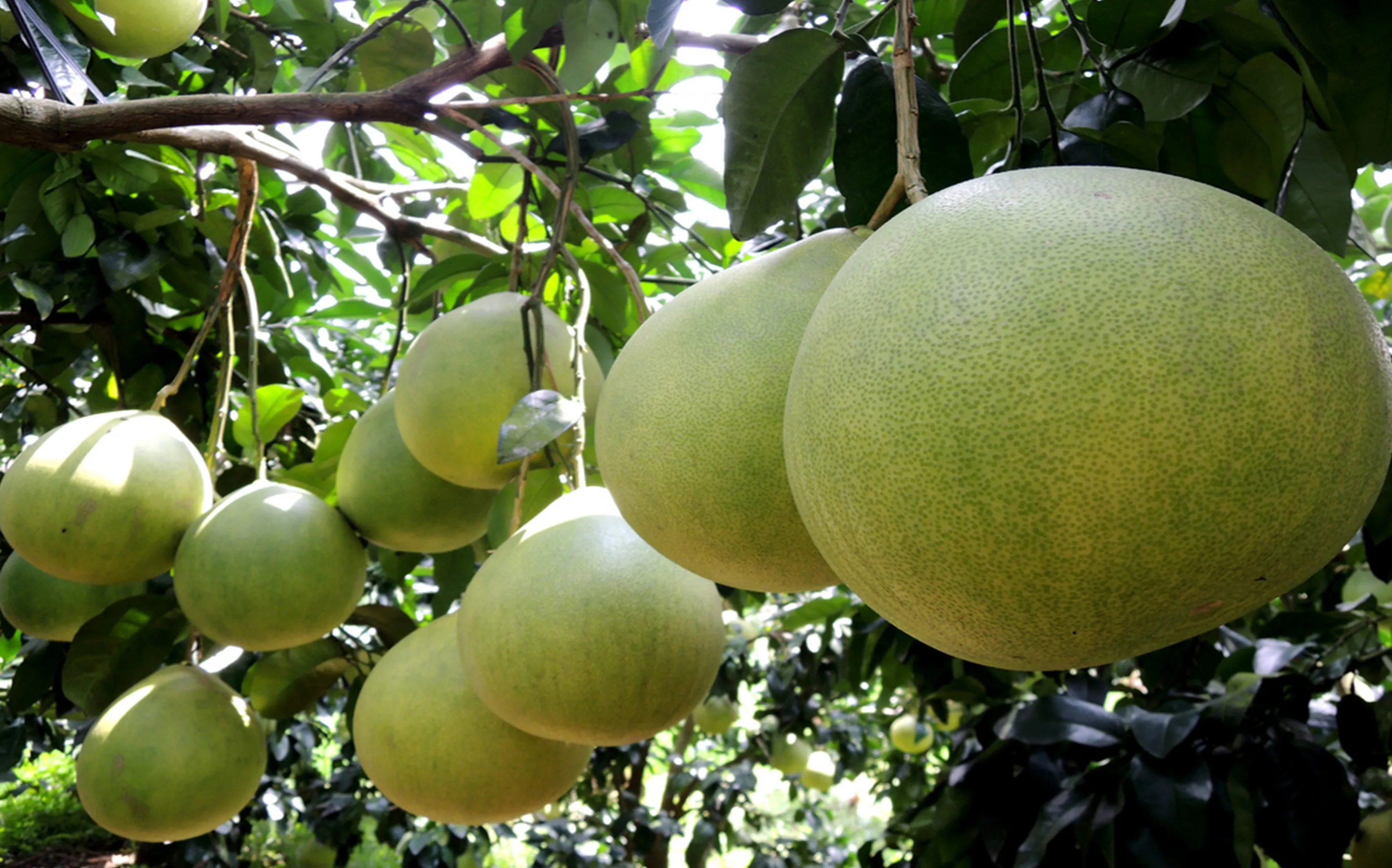
A report from the Department of Agriculture shows that the Davao region is still the top producer of pomelo in the country with a production volume of 39%, higher by one percent compared to the Cagayan Valley region.
The region’s pomelo production could be higher if it were not for problems related to pests and diseases. To remedy this, the Southern Mindanao Agriculture and Resources Research and Development Consortium (SMARRDEC) came up with a program to boost the development of pomelo in the region.
SMARRDEC and the Philippine Council for Agriculture Forestry and Natural Resources Research and Development Consortium have identified other industry concerns, including high fertilizer cost, sour or bitter taste of pomelo, dry pulp bits and disease-free planting materials.
Pomelo is in fact one fruit which has a lot of uses from the outside to the inside. While the fruit pulp is the main reason why people buy pomelo, the peel is also very useful and can be turned into marmalade. The peel can also be used as flavoring.
Pomelos grow quite well in subtropical and tropical areas and will easily bear fruit in three years. There are different varieties of pomelos grown in Davao as sold by the Sungee and Dizon Farms. This fruit has actually found more uses in the Dabawenyo cuisine. Aside from being consumed raw, pomelos are now used in the preparation of salads and juices.